Mobile Winter Tire Change in Toronto: Why It’s Worth Booking Before the First Snow
Toronto’s first snowy morning is a poor time to discover that your car still needs winter tires. Appointment schedules can become harder to fit around work, school runs, and other commitments just when you need dependable traction. Booking a mobile winter tire change in Toronto before the rush gives you time to check your tires, choose a suitable service location and plan the switch without another trip across the city.
You do not have to wait for snow to make the change. The better signal is a sustained drop in temperature. With Kambio’s on-location tire service, the seasonal switch can be arranged around your day rather than a waiting room.
When Should You Book a Winter Tire Change in Toronto?
Watch for Consistent Temperatures Below 7°C
According to Michelin Canada’s winter tire timing guidance, drivers should install winter tires when daily temperatures consistently fall below about 7°C. Winter tire rubber is formulated to retain useful flexibility in the cold, even when roads are dry. Summer and many all-season tires are less well suited to these temperatures.
Toronto’s fall weather rarely follows a perfectly steady pattern. A warm afternoon does not cancel out weeks of cold morning commutes. Watch the multi-day forecast rather than one date or the first flakes. Kambio’s earlier guide on when to make the winter tire switch explores the seasonal decision in more detail.
Book Before the First Sustained Cold Spell
Aim to arrange your appointment while you still have flexibility in your schedule. This might mean contacting a provider in early autumn and choosing an installation date when the temperature trend supports the swap. You are not trying to put winter tires on months too early; you are giving yourself room to select an appropriate day.

If you regularly travel outside Toronto, drive very early, or use highways at night, think about the coldest conditions you are likely to encounter, not only the weather at your front door. For a broader explanation of tire timing, see how and when to change from summer to winter tires.
Why Mobile Winter Tire Changes Make Sense for Busy Toronto Drivers
Skip the Extra Trip to a Tire Shop
A traditional tire appointment may require a drive to the shop, parking, a wait, and the return journey. A mobile tire change at home or at work can eliminate much of that travel. The service still needs a suitable, accessible workspace and confirmation of the work being performed, but it can be easier to coordinate with a full calendar.
The convenience is especially useful for commuters, families juggling several vehicles, and people who work downtown. Kambio offers seasonal tire change services in Toronto, including the option to request service at an appropriate location. Its mobile service model lets you plan the work around your routine.
Prepare for the Appointment Instead of Scrambling
An early booking also creates time to find the wheel-lock key, confirm the winter set is ready, and arrange access to tires in storage. If a tire has a damaged sidewall, uneven tread, or an incompatible size, discovering that before your appointment is much easier than addressing it during the first snowstorm.
Planning ahead matters, but it is not a substitute for choosing safe tires. Kambio has separately covered the real cost of delaying a winter tire change, including traction-related concerns. This article is about the practical steps that make the booking itself easier.
What to Check Before Scheduling Your Tire Change
Know Whether Your Winter Tires Are on Rims
Tell the provider whether your winter tires are already mounted on a second set of wheels. A wheel changeover and an installation involving removal, mounting, and balancing are different jobs, with different equipment requirements. Confirm the scope of your mobile appointment before booking, particularly if the winter set is loose tires rather than complete wheel assemblies.
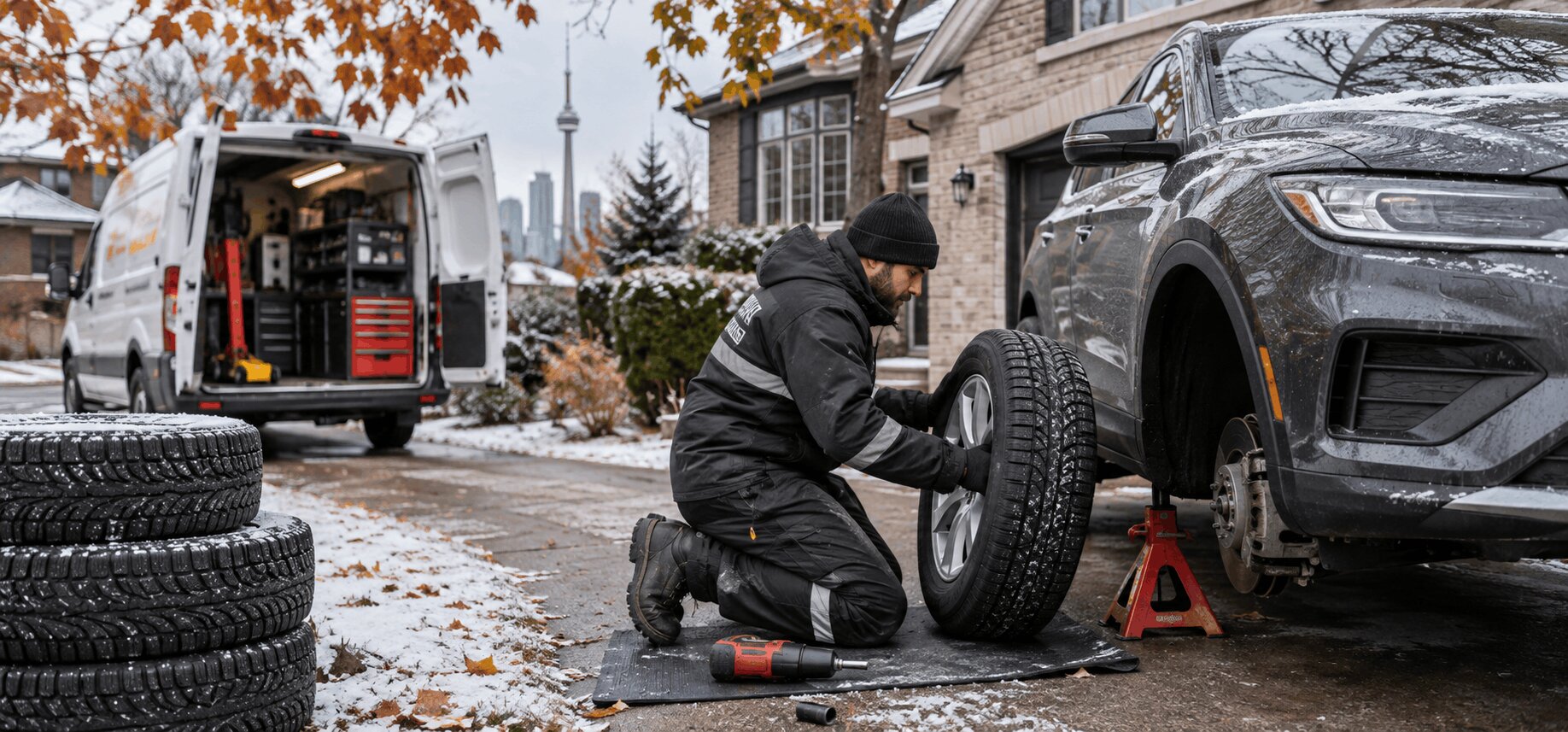
Also share your vehicle’s year, make, model, and any special wheel setup. If you need tires rather than a changeover, Kambio’s tire service page is the most relevant starting point for discussing fitment and service options.
Inspect the Tires You Plan to Install
Before the appointment, look for visible cracks, bulges, embedded objects, and uneven tread wear. Check that the set is correctly sized for your vehicle and that you have four appropriate winter tires. An issue that is not obvious from a quick glance may need a technician’s assessment; do not assume a tire is safe simply because it was used last winter.
Kambio’s guide on how to inspect your tires covers routine checks in greater depth, while its article about choosing the right tire provides additional background on tire selection. If you are unsure about damage or wear, mention it when requesting service so you can discuss whether inspection or replacement is appropriate.
Think About Pressure, Sensors and Stored Tires
Cold weather affects tire pressure, so check pressures against the vehicle manufacturer’s label after installation. Michelin Canada recommends regular cold-pressure checks, including before longer trips. If your car uses a tire pressure monitoring system (TPMS), let the technician know if warning lights are showing or sensors may need attention.
Tesla owners can review Kambio’s Tesla tire pressure guide and Tesla tire care and tire change guide for model-specific context. They can also explore Kambio’s Tesla tire change service in Toronto when requesting an appointment.
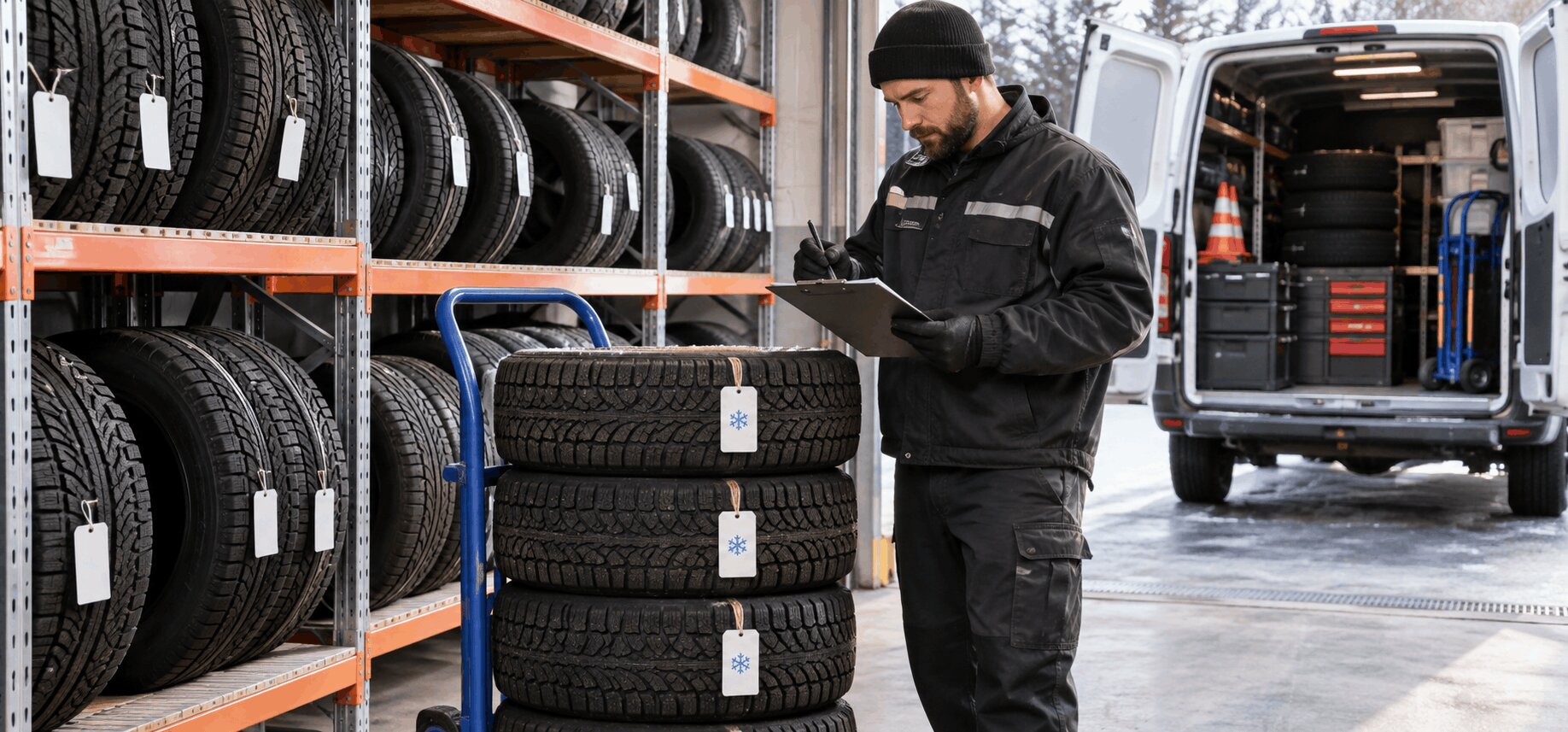
If your winter tires are in seasonal storage, contact the storage provider early. Ask how retrieval works and how much notice is needed. Kambio also discusses seasonal tire storage for Toronto luxury vehicles, including why proper off-season conditions matter. Confirm pickup arrangements directly rather than assuming your stored set will arrive automatically.
How to Prepare for an On-Site Winter Tire Appointment
A little preparation helps the technician assess whether the work can be performed safely and efficiently:
- Share your vehicle details and the tire or wheel size when requesting the service.
- Confirm whether your tires are mounted on rims, loose, or kept in storage.
- Identify a safe, level, and accessible parking area. Condo and workplace locations may need building permission.
- Have your wheel-lock key, tire set, and contact information available.
- Ask whether the appointment includes any needed balancing, TPMS support, or other tire work.
For downtown Toronto appointments, do not assume a technician can work in any underground garage or curbside space. Access, lighting, ceiling clearance, permissions, and site safety can affect what is possible. Confirm the location with the provider before the appointment.
How Kambio’s Mobile Winter Tire Service Fits Into Your Schedule
Request a Seasonal Changeover

Kambio’s seasonal tire change service covers winter tire installation, seasonal swaps, tire checks, and storage options. Start on the seasonal tire change in Toronto page, review what your vehicle requires, and use the booking link to request an appointment. Confirm the location and any wheel-mounting requirements before the visit.
Ask About Additional Tire Services When Needed
A tire change is a convenient moment to flag concerns such as unusual wear, low pressure, or a TPMS alert. It is better to describe these issues ahead of time than to assume they are included in a basic seasonal changeover. If tires need replacement, discuss suitable options and whether extra work can be handled on-site.
Drivers with electric vehicles may have specific wheel sizes, jacking procedures, and monitoring requirements. For Tesla owners, Kambio’s dedicated Tesla tire change page outlines its vehicle-focused service options. If broader car maintenance is on your list, Kambio also provides general maintenance services; discuss the work separately rather than treating it as part of the tire appointment.
Mobile Tire Change vs. Visiting a Traditional Shop
Neither option is universally better. Choose based on the tire work required, the location, and the amount of coordination you can realistically manage.
- Travel and waiting: Mobile service can reduce travel to a shop; a shop requires you to get the vehicle there.
- Location: Mobile work needs a safe, approved space; a shop provides a dedicated service bay.
- Equipment: Ask whether loose-tire mounting, balancing, and TPMS work are available at your location; a shop may be preferable for services the mobile setup cannot perform.
- Storage: In either case, confirm where tires are stored and how they will be retrieved.
- Scheduling: Advance booking helps with either option, but mobile appointments may be particularly practical during a workday.
If convenience is a major consideration, Kambio’s article on how mobile oil change services save time for busy drivers explains the larger appeal of on-location maintenance. The same planning principle applies to tire changeovers, although the actual service requirements differ.
Three Ways to Avoid a Last-Minute Winter Tire Rush
First, watch the temperature trend and decide on an installation window before consistently cold conditions arrive. Second, inspect your winter set and confirm where it is stored. Third, request a booking with enough lead time to clarify service scope and access arrangements.
Do not let a booked appointment become a reason to keep driving on unsuitable tires if severe conditions arrive earlier than expected. Adjust your travel plans for the actual road conditions, and never assume winter tires eliminate the need for cautious driving.
Book Your Winter Tire Change Before Toronto’s First Snow
The best advantage of booking early is control over your schedule. You can make sure your tires are ready, coordinate access to the vehicle, and choose a changeover date that matches Toronto’s cooling weather. Mobile service makes that process more practical for drivers who would rather avoid another shop visit.
Explore Kambio’s tire change services or book a mobile tire appointment to discuss your winter tire switch before the first major cold spell.
Frequently Asked Questions
1. How early should I book a winter tire change in Toronto?
Start planning before sustained daily temperatures fall below about 7°C. You can contact a service provider ahead of that point to arrange a suitable appointment rather than waiting for the first snowfall.
2. Can I get winter tires changed at my condo or office?
Potentially, yes. Mobile service depends on a safe, accessible working area and any required property permission. Confirm the proposed address, parking conditions, and vehicle access before booking.
3. Can mobile technicians install winter tires that are not on rims?
Loose tires require mounting and usually balancing, which is different from swapping complete wheel assemblies. Ask whether that work is available for your vehicle and service location.
4. Should I put winter tires on all four wheels?
Yes. A matching set of four appropriate winter tires helps maintain balanced traction and predictable handling. Mixing winter and non-winter tires can create different grip levels between the axles.
5. What if my winter tires are in storage?
Contact the storage provider in advance, confirm the set is available, and find out whether retrieval or delivery must be arranged separately. Check whether the appointment includes any storage-related service.
6. Will changing tires affect the TPMS warning light?
It depends on the vehicle, wheels, and sensor setup. A warning may indicate low pressure or a sensor issue. Tell the provider about the warning and ask whether sensor inspection or programming is needed.
7. Are winter tires legally mandatory in Toronto?
Ontario does not impose a general calendar-based winter tire mandate for ordinary passenger vehicles. That does not make winter tires unnecessary: choose tires for the conditions you drive in and check current rules for other provinces if travelling.
8. Is it too late to switch after the first snowfall?
No. Arrange a changeover as soon as practical. Until then, avoid driving when your current tires are unsuitable for the conditions. Ask about the next appropriate appointment rather than assuming availability.